Showing posts with label Evening Prayers. Show all posts

Sunday, May 29, 2011

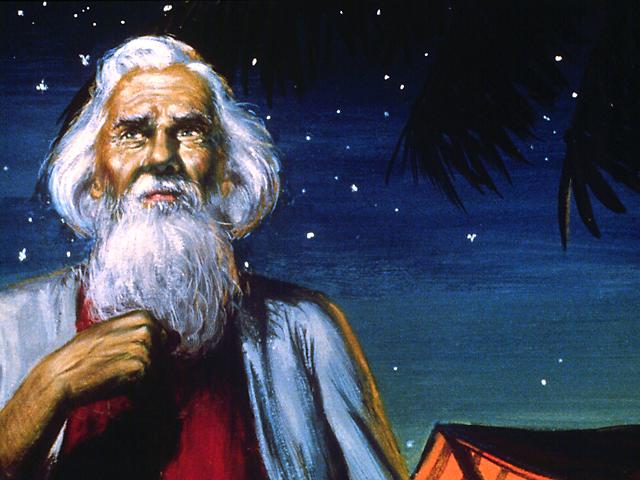
Pope Benedict XVI: PRAYER IN SACRED SCRIPTURE; Jacob

Dear Brothers and Sisters,

Today I would like to reflect with you upon a text from the Book of Genesis that narrates a rather particular episode in the history of the Patriarch Jacob. It is not an easily interpreted passage, but it is an important one for our life of faith and prayer; it recounts the story of his wrestling with God at the ford of the Jabbok, from which we have just heard a passage.

As you will remember, Jacob had taken away his twin brother Esau's birthright in exchange for a dish of lentils and then, through deception, had stolen the blessing of his father Isaac who was already quite advanced in years, by taking advantage of his blindness. Having escaped Esau's fury, he had taken refuge with a relative, Laban; he married and had grown rich and now was returning to the land of his birth, ready to face his brother after having put several prudent measures in place. But when he is all ready for this encounter -- after having made those who were with him cross the ford of the stream marking Esau's territory -- Jacob, now left alone, is suddenly attacked by an unknown figure who wrestles with him for the whole of the night. It is this hand to hand battle which we find in Chapter 32 of the Book of Genesis that becomes for him a singular experience of God.

Night is the favorable time for acting in secret, the best time, therefore, for Jacob to enter his brother's territory without being seen, and perhaps with the illusion of taking Esau unawares. But instead, it is he who is surprised by an unexpected attack for which he was not prepared. He had used his cunning to try to save himself from a dangerous situation, he thought he had succeeded in having everything under control, and instead he now finds himself facing a mysterious battle that overtakes him in solitude without giving him the possibility of organizing an adequate defense. Defenseless -- in the night -- the Patriarch Jacob fights with someone. The text does not specify the aggressor's identity; it uses a Hebraic term that generically indicates "a man," "one, someone;" it therefore has a vague, undetermined definition that intentionally keeps the assailant in mystery. It is dark. Jacob is unsuccessful in seeing his opponent distinctly, and also for the reader he remains unknown. Someone is setting himself against the patriarch; this is the only sure fact furnished by the narrator. Only at the end, once the battle has ended and that "someone" has disappeared, only then will Jacob name him and be able to say that he has wrestled with God.

The episode unfolds, therefore, in obscurity and it is difficult to perceive not only the identity of Jacob's assailant, but also the battle's progress. Reading the passage, it is hard to establish which of the two contenders succeeds in having the upper hand. The verbs used often lack an explicit subject, and the actions progress in an almost contradictory way, so that when one thinks that either of the two has prevailed, the next action immediately contradicts it and presents the other as the winner. At the beginning, in fact, Jacob seems to be the strongest, and the adversary -- the text states -- "did not prevail against him" (verse 26 [25]); yet he strikes the hollow of his thigh, dislocating it. One would then be led to think that Jacob has to surrender, but instead it's the other who asks him to let him go; and the patriarch refuses, laying down a condition: "I will not let you go, unless you bless me" (verse 27). He who by deception had defrauded his brother of the firstborn's blessing, now demands it from the stranger in whom perhaps he begins to see divine characteristics, but still without being able to truly recognize him.

The rival, who seemed to be held and therefore defeated by Jacob, instead of submitting to his request, asks his name: "What is your name?" And the patriarch responds: "Jacob" (verse 28). Here the battle undergoes an important development. To know someone's name, in fact, implies a kind of power over the person, since the name, in biblical thinking, contains the most profound reality of the individual; it unveils his secret and his destiny. Knowing someone's name therefore means knowing the truth of the other, and this allows one to be able to dominate him. When, therefore, at the stranger's request, Jacob reveals his own name, he is handing himself over to his opponent; it is a form of surrender, of the total giving over of himself to the other.

But in this act of surrender, Jacob paradoxically also emerges as a winner, because he receives a new name, together with an acknowledgement of victory on the part of his adversary, who says to him: "Your name shall no more be called Jacob, but Israel, for you have striven with God and with men, and have prevailed" (verse 29 [28]). "Jacob" was a name that recalled the patriarch's problematic beginnings; in Hebrew, in fact, it calls to mind the word "heel," and takes the reader back to the moment of Jacob's birth when, coming from the maternal womb, his hand took hold of his twin brother's heel (cf. Gen. 25:26), as though prefiguring the overtaking of his brother's rights in his adult life; but the name Jacob also calls to mind the verb "to deceive, to supplant." Now, in the battle, the patriarch reveals to his opponent, through an act of entrustment and surrender, his own reality as a deceiver, a supplanter; but the other, who is God, transforms this negative reality into something positive: Jacob the deceiver becomes Israel; he is given a new name that signifies a new identity. But also here, the account maintains its intended duplicity, since the most probable meaning of the name Israel is "God is mighty, God triumphs."

Jacob therefore prevailed, he triumphed -- it is the adversary himself who affirms it – but his new identity, received by the same adversary, affirms and testifies to God's triumph. When in turn Jacob will ask his contender's name, he will refuse to pronounce it, but he will reveal himself in an unequivocal gesture, by giving him his blessing. That blessing which the patriarch had asked at the beginning of the battle is now granted him. And it is not the blessing grasped by deception, but that given freely by God, which Jacob is able to receive because now he is alone, without protection, without cunning and deception. He gives himself over unarmed; he accepts surrendering himself and confessing the truth about himself. And so, at the end of the battle, having received the blessing, the patriarch is able finally to recognize the other, the God of the blessing: "I have seen God face to face, and yet my life is preserved" (verse 31 [30]), and now he can cross the ford, the bearer of a new name but "conquered" by God and marked forever, limping from the wound he received.

The explanations that biblical exegesis can give regarding this passage are numerous; in particular, the learned recognize in it intentions and literary components of various kinds, as well as references to a few popular stories. But when these elements are taken up by the sacred authors and included in the biblical account, they change in meaning and the text opens itself up to broader dimensions. The episode of the wrestling at the Jabbok is offered to the believer as a paradigmatic text in which the people of Israel speak of their own origins and trace out the features of a particular relationship between God and man. For this reason, as the Catechism of the Catholic Church also affirms: "the spiritual tradition of the Church has retained the symbol of prayer as a battle of faith and as the triumph of perseverance" (No. 2573).

The biblical text speaks to us of the long night of the search for God, of the battle to know his name and to see his face; it is the night of prayer that, with tenacity and perseverance, asks a blessing and a new name from God, a new reality as the fruit of conversion and of forgiveness.

In this way, Jacob's night at the ford of the Jabbok becomes for the believer a point of reference for understanding his relationship with God, which in prayer finds its ultimate expression. Prayer requires trust, closeness, in a symbolic "hand to hand" not with a God who is an adversary and enemy, but with a blessing Lord who remains always mysterious, who appears unattainable. For this reason the sacred author uses the symbol of battle, which implies strength of soul, perseverance, tenacity in reaching what we desire. And if the object of one's desire is a relationship with God, his blessing and his love, then the battle cannot but culminate in the gift of oneself to God, in the recognition of one's own weakness, which triumphs precisely when we reach the point of surrendering ourselves into the merciful hands of God.

Dear brothers and sisters, our whole life is like this long night of battle and prayer that is meant to end in the desire and request for God's blessing, which cannot be grasped or won by counting on our own strength, but must be received from him with humility, as a gratuitous gift that allows us, in the end, to recognize the face of the Lord. And when this happens, our whole reality changes; we receive a new name and the blessing of God. But even more: Jacob, who receives a new name, who becomes Israel, also gives a new name to the place where he wrestled with God; he prayed there and renamed it Peniel, which means "the Face of God." With this name, he recognized that place as filled with God's presence; he renders the land sacred by imprinting upon it the memory of that mysterious encounter with God. He who allows himself to be blessed by God, who abandons himself to him, who allows himself to be transformed by him, renders the world blessed. May the Lord help us to fight the good fight of faith (cf. Timothy 6:12; 2 Timothy 4:7) and to ask his blessing in our prayer, so that he may renew in us the anticipation of seeing his face. Thank you.

Text from (http://www.zenit.org/article-32676?l=english)

Saturday, May 28, 2011

Pope Benedict XVI: PRAYER IN SACRED SCRIPTURE; Abraham


Dear Brothers and Sisters,

In the last two Catecheses we have reflected on prayer as a universal phenomenon which — although in different forms — is present in the cultures of all times. 

Today instead I would like to start out on a biblical path on this topic which will guide us to deepening the dialogue of the Covenant between God and man, which enlivened the history of salvation to its culmination, to the definitive Word that is Jesus Christ. 

This path will lead us to reflect on certain important texts and paradigmatic figures of the Old and New Testaments. It will be Abraham the great Patriarch, the father of all believers (cf. Rom 4:11-12, 16-17), to offer us a first example of prayer in the episode of intercession for the cities of Sodom and Gomorrah. 

And I would also like to ask you to benefit from the journey we shall be making in the forthcoming catecheses to become more familiar with the Bible, which I hope you have in your homes and, during the week, to pause to read it and to meditate upon it in prayer, in order to know the marvellous history of the relationship between God and man, between God who communicates with us and man who responds, who prays.

The first text on which we shall reflect is in chapter 18 of the Book of Genesis. It is recounted that the evil of the inhabitants of Sodom and Gomorrah had reached the height of depravity so as to require an intervention of God, an act of justice, that would prevent the evil from destroying those cities. 

It is here that Abraham comes in, with his prayer of intercession. God decides to reveal to him what is about to happen and acquaints him with the gravity of the evil and its terrible consequences, because Abraham is his chosen one, chosen to become a great people and to bring the divine blessing to the whole world. His is a mission of salvation which must counter the sin that has invaded human reality; the Lord wishes to bring humanity back to faith, obedience and justice through Abraham. And now this friend of God seeing the reality and neediness of the world, prays for those who are about to be punished and begs that they be saved.

Abraham immediately postulates the problem in all its gravity and says to the Lord: “Will you indeed destroy the righteous with the wicked? Suppose there are fifty righteous within the city; will you then destroy the place and not spare it for the fifty righteous who are in it? Far be it from you to do such a thing, to slay the righteous with the wicked, so that the righteous fare as the wicked! Far be that from you! Shall not the Judge of all the earth do right?” (Gen 18: 23-25). 

Speaking these words with great courage, Abraham confronts God with the need to avoid a perfunctory form of justice: if the city is guilty it is right to condemn its crime and to inflict punishment, but — the great Patriarch affirms — it would be unjust to punish all the inhabitants indiscriminately. If there are innocent people in the city, they must not be treated as the guilty. God, who is a just judge, cannot act in this way, Abraham says rightly to God.

However, if we read the text more attentively we realize that Abraham's request is even more pressing and more profound because he does not stop at asking for salvation for the innocent. Abraham asks forgiveness for the whole city and does so by appealing to God’s justice; indeed, he says to the Lord: “Will you then destroy the place and not spare it for the fifty righteous who are in it?” (v. 24b).

In this way he brings a new idea of justice into play: not the one that is limited to punishing the guilty, as men do, but a different, divine justice that seeks goodness and creates it through forgiveness that transforms the sinner, converts and saves him. With his prayer, therefore, Abraham does not invoke a merely compensatory form of justice but rather an intervention of salvation which, taking into account the innocent, also frees the wicked from guilt by forgiving them. 

Abraham’s thought, which seems almost paradoxical, could be summed up like this: obviously it is not possible to treat the innocent as guilty, this would be unjust; it would be necessary instead to treat the guilty as innocent, putting into practice a “superior” form of justice, offering them a possibility of salvation because, if evildoers accept God’s pardon and confess their sin, letting themselves be saved, they will no longer continue to do wicked deeds, they too will become righteous and will no longer deserve punishment.

It is this request for justice that Abraham expresses in his intercession, a request based on the certainty that the Lord is merciful. Abraham does not ask God for something contrary to his essence, he knocks at the door of God’s heart knowing what he truly desires.

Sodom, of course, is a large city, 50 upright people seem few, but are not the justice and forgiveness of God perhaps proof of the power of goodness, even if it seems smaller and weaker than evil? The destruction of Sodom must halt the evil present in the city, but Abraham knows that God has other ways and means to stem the spread of evil. It is forgiveness that interrupts the spiral of sin and Abraham, in his dialogue with God, appeals for exactly this. And when the Lord agrees to forgive the city if 50 upright people may be found in it, his prayer of intercession begins to reach the abysses of divine mercy.

Abraham — as we remember — gradually decreases the number of innocent people necessary for salvation: if 50 would not be enough, 45 might suffice, and so on down to 10, continuing his entreaty, which became almost bold in its insistence: “suppose 40... 30... 20... are found there” (cf. vv. 29, 30, 31, 32). The smaller the number becomes, the greater God’s mercy is shown to be. He patiently listens to the prayer, he hears it and repeats at each supplication: “I will spare... I will not destroy... I will not do it” (cf. vv. 26,28, 29, 30, 31, 32). 

Thus, through Abraham’s intercession, Sodom can be saved if there are even only 10 innocent people in it. This is the power of prayer. For through intercession, the prayer to God for the salvation of others, the desire for salvation which God nourishes for sinful man is demonstrated and expressed. Evil, in fact, cannot be accepted, it must be identified and destroyed through punishment: The destruction of Sodom had exactly this function.

Yet the Lord does not want the wicked to die, but rather that they convert and live (cf. Ez 18:23; 33:11); his desire is always to forgive, to save, to give life, to transform evil into good. Well, it is this divine desire itself which becomes in prayer the desire of the human being and is expressed through the words of intercession.

With his entreaty, Abraham is lending his voice and also his heart, to the divine will. God’s desire is for mercy and love as well as his wish to save; and this desire of God found in Abraham and in his prayer the possibility of being revealed concretely in human history, in order to be present wherever there is a need for grace. By voicing this prayer, Abraham was giving a voice to what God wanted, which was not to destroy Sodom but to save it, to give life to the converted sinner.

This is what the Lord desires and his dialogue with Abraham is a prolonged and unequivocal demonstration of his merciful love. The need to find enough righteous people in the city decreases and in the end 10 were to be enough to save the entire population. 

The reason why Abraham stops at 10 is not given in the text. Perhaps it is a figure that indicates a minimum community nucleus (still today, 10 people are the necessary quorum for public Jewish prayer). However, this is a small number, a tiny particle of goodness with which to start in order to save the rest from a great evil. 

However, not even 10 just people were to be found in Sodom and Gomorrah so the cities were destroyed; a destruction paradoxically deemed necessary by the prayer of Abraham’s intercession itself. Because that very prayer revealed the saving will of God: the Lord was prepared to forgive, he wanted to forgive but the cities were locked into a totalizing and paralyzing evil, without even a few innocents from whom to start in order to turn evil into good.

This the very path to salvation that Abraham too was asking for: being saved does not mean merely escaping punishment but being delivered from the evil that dwells within us. It is not punishment that must be eliminated but sin, the rejection of God and of love which already bears the punishment in itself. 

The Prophet Jeremiah was to say to the rebellious people: “Your wickedness will chasten you, and your apostasy will reprove you. Know and see that it is evil and bitter for you to forsake the Lord your God” (Jer 2:19).

It is from this sorrow and bitterness that the Lord wishes to save man, liberating him from sin. Therefore, however, a transformation from within is necessary, some foothold of of goodness, a beginning from which to start out in order to change evil into good, hatred into love, revenge into forgiveness.

For this reason there must be righteous people in the city and Abraham continuously repeats: “suppose there are...”. “There”: it is within the sick reality that there must be that seed of goodness which can heal and restore life. It is a word that is also addressed to us: so that in our cities the seed of goodness may be found; that we may do our utmost to ensure that there are not only 10 upright people, to make our cities truly live and survive and to save ourselves from the inner bitterness which is the absence of God. And in the unhealthy situation of Sodom and Gomorrah that seed of goodness was not to be found.

Yet God’s mercy in the history of his people extends further. If in order to save Sodom 10 righteous people were necessary, the Prophet Jeremiah was to say, on behalf of the Almighty, that only one upright person was necessary to save Jerusalem: “Run to and fro through the streets of Jerusalem, look and take note! Search her squares to see if you can find a man, one who does justice and seeks truth; that I may pardon her” (5:1). 

The number dwindled further, God’s goodness proved even greater. Nonetheless this did not yet suffice, the superabundant mercy of God did not find the response of goodness that he sought, and under the  siege of the enemy Jerusalem fell. 

It was to be necessary for God himself to become that one righteous person. And this is the mystery of the Incarnation: to guarantee a just person he himself becomes man. There will always be one righteous person because it is he. However, God himself must become that just man. The infinite and surprising divine love was to be fully manifest when the Son of God was to become man, the definitive Righteous One, the perfect Innocent who would bring salvation to the whole world by dying on the Cross, forgiving and interceding for those who “know not what they do” (Lk 23:34). Therefore the prayer of each one will find its answer, therefore our every intercession will be fully heard.

Dear brothers and sisters, the prayer of intercession of Abraham, our father in the faith, teaches us to open our hearts ever wider to God’s superabundant mercy so that in daily prayer we may know how to desire the salvation of humanity and ask for it with perseverance and with trust in the Lord who is great in love. Many thanks.

© Copyright 2011 - Libreria Editrice Vaticana

Sunday, May 1, 2011

MAY DEVOTION: Introduction


THE return of May, when nature, awakened from her winter sleep, is clad in all her vernal beauty, reminds us that all should be fair and bright within us also, that our hearts ought to be adorned with fair virtues, so as to be pleasing to Jesus and Mary. Devotion to the Blessed Virgin, frequent meditation on her life and contemplation of her example, earnest endeavor to imitate her virtues — these are all excellent means of sanctifying the soul and of advancing in the love of God. And since the May devotions are intended to attain this laudable end, since they are commended to us by holy Church and enriched with indulgences, it especially behooves us, who are the adopted children of Mary and her devoted clients, to perform these exercises with a willing heart and in the spirit of piety. The following suggestions will serve as your guide.

1. If possible, receive the sacraments at the beginning of the month of May, in order that the meditations and devotions may bear more abundant fruit in your soul.

2. The chapters in the fore part and at the end of this book will furnish you with suitable matter for meditation and spiritual reading; to this you may add the Litany of Loreto and other prayers to the Blessed Virgin.

3. As your principal object propose to yourself to combat and thoroughly master some fault or bad habit, and to acquire the opposite virtue.

4. Every morning offer up your actions to Jesus and Mary, and endeavor earnestly to model your whole conduct by the example of the Blessed Virgin.

5. If you can manage to hear Mass daily, see that you do so; and if the May devotions are not held in public, perform them by yourself, either in church before the shrine of Our Lady, or at home before your own little altar of the Blessed Virgin.

6. Recite the Rosary frequently.

7. Finally, do your best to promote devotion to our blessed Lady amongst those with whom you come into contact.

Friday, April 22, 2011

THE HOUR OF GREAT MERCY


Our Lord said to Saint Faustina:

At three o'clock, implore My mercy, especially for sinners; and, if only for a brief moment, immerse yourself in My Passion, particularly in My abandonment at the moment of agony. This is the hour of great mercy ... In this hour I will refuse nothing to the soul that makes a request of Me in virtue of My Passion. (Diary 1320).

As often as you hear the clock strike the third hour immerse yourself completely in My mercy, adoring and glorifying it, invoke it's omnipotence for the whole world, and particularly for poor sinners, for at that moment mercy was opened wide for every soul. In this hour you can obtain everything for yourself and for others for the asking; it was the hour of grace for the whole world - mercy triumphed over justice.

Try your best to make the Stations of the Cross in this hour, provided that your duties permit it; and if you are not able to make the Stations of the Cross, then at least step into the chapel for a moment and adore, in the Most Blessed Sacrament. My Heart, which is full of mercy: and should you be unable to step into chapel. immerse yourself in prayer there where you happen to be, if only for a very brief instant. (Diary 1572)


 THE THREE O'CLOCK PRAYER

You died Jesus, but the source of life flowed out for souls and the ocean of mercy opened up for the whole world.

O Fountain of Life, immeasurable Divine Mercy, cover the whole world and empty Yourself out upon us.

O Blood and Water which flowed out from the heart of Jesus as a Fountain of Mercy for us, I trust in You!

Holy God, Holy Mighty One, Holy Immortal One, have mercy on us and the whole world.

AMEN.

 Jesus, King of Mercy, we trust in You!


PRAYER BEFORE A CRUCIFIX
BEHOLD, O good and sweetest Jesus, I cast myself upon my knees in Thy sight, and with the most fervent de sire of my soul I pray and beseech  Thee to impress upon my heart lively sentiments of faith, hope and charity, with true repentance for my sins and a most firm desire of amendment: whilst with deep affection and grief of soul I consider within myself and mentally contemplate Thy five most precious Wounds, having before mine eyes that which David, the prophet, long ago spoke in Thine own person concerning Thee, my Jesus: They have pierced my hands and my feet, they have numbered all my bones [Psalm 21, 17, 18].

Say Our Father, Hail Mary, Glory Be for the Catholic Church and the intentions of the Holy Father. A plenary indulgence, under the usual conditions, may be gained by those who shall say this prayer with devotion before an image of our crucified Redeemer. An partial indulgence may also be gained for each devout recitation.


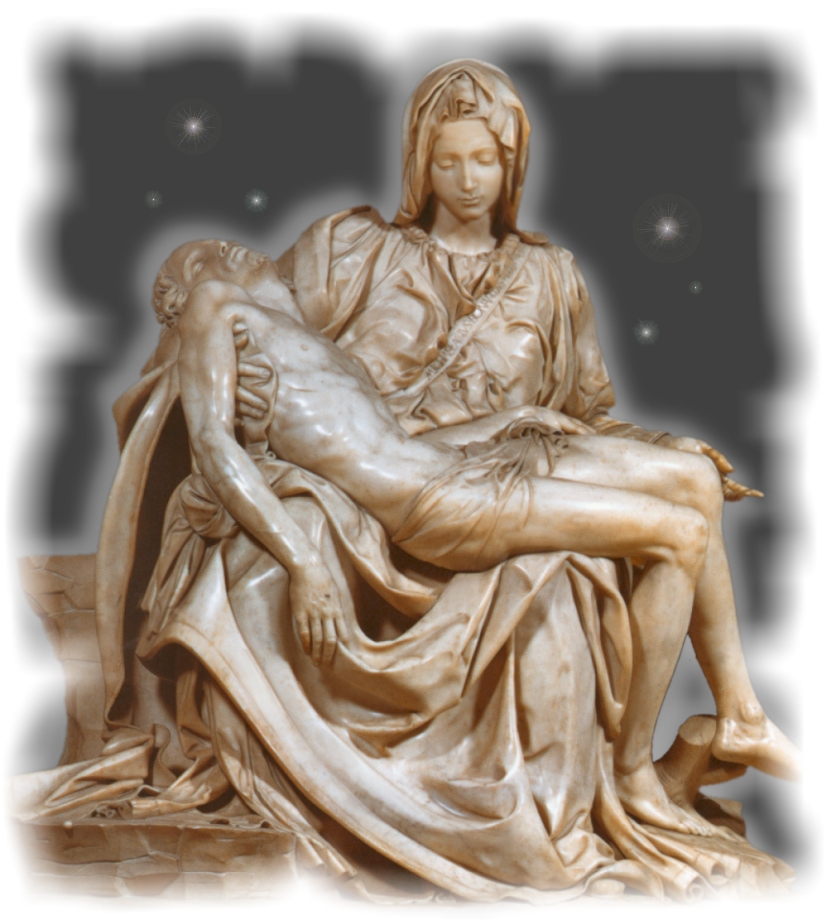
PRAYER TO THE SORROWFUL MOTHER
Most holy Mother of Sorrows, by that soul-piercing martyrdom thou didst undergo at the foot of the Cross during the three hours' agony of Jesus, deign to assist me also, who am the child of thy Sorrows, in my agony, so that by thine intercession I may be found worthy to pass from my deathbed to thy blessed society in Paradise.

V. From a sudden and unprovided death,
R. Deliver me, O Lord.
V. From the snares of the devil,
R. Deliver me, O Lord.
V. From everlasting death,
R. Deliver me, O Lord.

Let us pray.
O God, Who for the salvation of mankind hast made for us in the most bitter death of Thy Son both an example and a refuge; grant, we beseech Thee, that we may be found worthy to obtain the fruit of His great love in our final peril at the hour of death, and to be made partakers of our Redeemer's glory.  Through the same Christ our Lord. Amen.